
Table of Contents
How Many Sajdahs are in the Quran? The Complete List and Rules
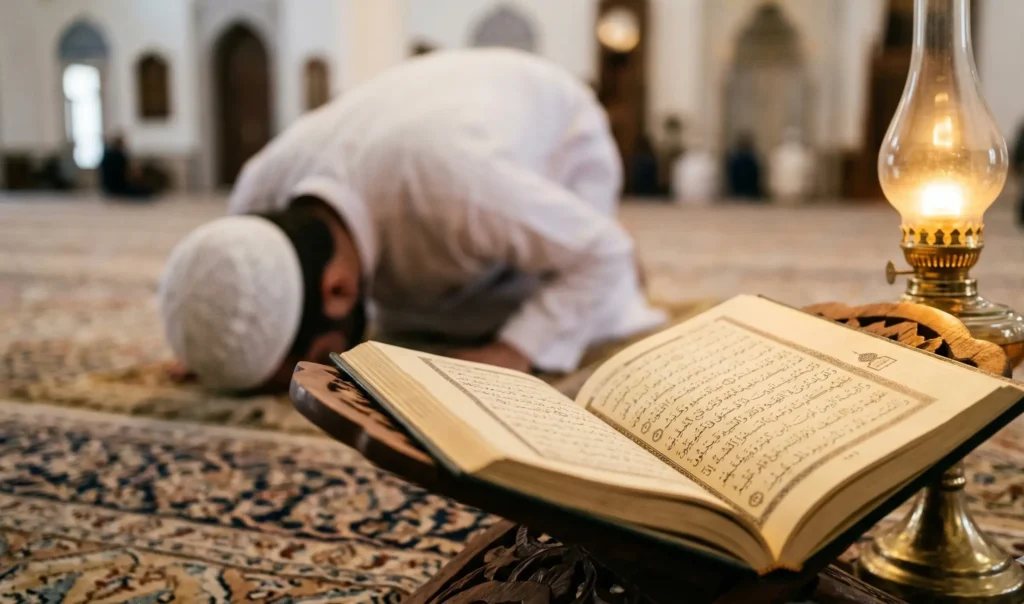
For devoted, practicing Muslims across the globe, reciting the glorious Book of Allah is a daily, magnificent spiritual necessity. As you beautifully flow through the sacred Arabic text, you will inevitably encounter specific verses that require you to immediately pause your recitation and physically bow down to the ground. This profound act of worship is known as Sajdah al-Tilawat (the Prostration of Recitation).
However, many Muslims reading at home frequently experience sudden, terrible confusion. Exactly how many sajdahs are in the quran? What are the strict rules for performing them? Do you absolutely need to have Wudu (ablution)? What if you are listening to a recorded recitation on your phone while commuting?
If you perform these prostrations incorrectly or ignorantly skip them, you are missing out on a spectacular, immense spiritual reward. This ultimate, comprehensive guide will brilliantly break down the exact number of Sajdahs, provide a complete, easy-to-read reference list, and deeply explain the exact Fiqh (jurisprudence) rules you absolutely must follow.
The Profound Spiritual Significance of Sajdah Tilawat
Before we count the exact number, we must absolutely understand why we are throwing ourselves to the ground.
When Allah (Subhanahu wa Ta’ala) created the Prophet Adam (peace be upon him), He commanded the angels and Iblis (Satan) to prostrate. The angels immediately and beautifully obeyed, but Iblis displayed terrible, devastating arrogance and refused.
Every single time a believer encounters a verse of prostration and physically lowers their forehead to the earth, they are brilliantly defying Satan and displaying the ultimate, magnificent humility to their Creator.
According to a spectacular, authentic Hadith recorded in Sahih Muslim (Sunnah.com reference), Abu Huraira reported that the Messenger of Allah (peace be upon him) said: “When the son of Adam recites a verse of prostration and prostrates, Satan withdraws weeping, saying: ‘Woe to me! The son of Adam was commanded to prostrate, and he prostrated, so Paradise is his. I was commanded to prostrate, and I refused, so the Fire is mine.'”
This is an incredible, profound victory for the believer. You absolutely do not want to miss this magnificent opportunity.
Exactly How Many Sajdahs Are in the Quran?
If you ask various scholars, “exactly how many sajdahs are in the quran?”, you might be terribly confused to hear slightly different numbers. This is not an error in the text; rather, it is a magnificent display of the rich, deeply researched differences in classical Islamic jurisprudence (Fiqh).
The vast majority of classical scholars, including the spectacular minds of the Shafi’i and Hanbali schools of thought, firmly state that there are exactly 14 Sajdahs in the Holy Quran.
However, the brilliant scholars of the Hanafi school of thought officially recognize 14 Sajdahs. The difference arises specifically regarding the second prostration found in Surah Al-Hajj (Chapter 22). Furthermore, the Maliki school traditionally recognizes 11 mandatory prostrations, omitting the ones found in Surah An-Najm, Al-Inshiqaq, and Al-Alaq.
Despite these incredibly rich academic differences, the universally accepted, standard printed copies of the Mushaf (such as the widespread Medina script) place visual markers at 15 distinct locations. To ensure you never miss a blessing, it is highly recommended to perform all 15.
The Complete, Authoritative Reference List of All 15 Sajdahs
When you are reading at home and need an immediate, trustworthy reference, use this complete, spectacular table. Bookmark this exact page so you can return to it instantly during your daily recitation.
| Sajdah Number | Surah Name (Chapter) | Surah Number | Juz Number | Ayat (Verse) Number |
| 1 | Surah Al-A’raf | 7 | 9 | 206 |
| 2 | Surah Ar-Ra’d | 13 | 13 | 15 |
| 3 | Surah An-Nahl | 16 | 14 | 50 |
| 4 | Surah Al-Isra (Bani Israil) | 17 | 15 | 109 |
| 5 | Surah Maryam | 19 | 16 | 58 |
| 6 | Surah Al-Hajj (First) | 22 | 17 | 18 |
| 7 | Surah Al-Hajj (Second) (Not in Hanafi ) Fiqh | 22 | 17 | 77 |
| 8 | Surah Al-Furqan | 25 | 19 | 60 |
| 9 | Surah An-Naml | 27 | 19 | 26 |
| 10 | Surah As-Sajdah | 32 | 21 | 15 |
| 11 | Surah Sad | 38 | 23 | 24 |
| 12 | Surah Fussilat | 41 | 24 | 38 |
| 13 | Surah An-Najm | 53 | 27 | 62 |
| 14 | Surah Al-Inshiqaq | 84 | 30 | 21 |
| 15 | Surah Al-Alaq | 96 | 30 | 19 |
How Do You Know When to Prostrate? (The Visual Markers)
You absolutely do not need to memorize the table above to know when to perform the Sajdah. The brilliant calligraphers of the Quran have made it incredibly easy.
When reading a physical Arabic Mushaf, look for two distinct, spectacular visual cues:
- A thick, heavy line drawn directly above the specific word that triggers the prostration.
- An ornate, beautiful symbol resembling a small dome or mihrab at the end of the verse. It will often have the Arabic word “سجدة” (Sajdah) written inside or next to it.
The Strict Rules of Performing Sajdah Tilawat
This is where many well-meaning Muslims make terrible, invalidating mistakes. Sajdah Tilawat is an incredible act of worship, and therefore, it carries specific, non-negotiable conditions.
1. Is Wudu (Ablution) Absolutely Required?
The majority of classical scholars (including the Hanafi, Shafi’i, and Hanbali schools) agree that Sajdah Tilawat is treated with the exact same strict reverence as formal Salah (prayer). Therefore, you absolutely must be in a state of Wudu (ritual purity) to perform it. You cannot simply throw yourself on the ground if you are impure. (For deeply detailed rulings on ritual purity, the Assembly of Muslim Jurists of America (AMJA) provides excellent, highly researched contemporary fatwas).
2. Do You Need to Face the Qiblah?
Yes. Just like formal prayer, you must completely orient your body toward the glorious Kaaba in Mecca. It is a devastating mistake to perform the Sajdah facing a random direction simply because that is the way your chair is facing.
3. Do Women Need to Wear a Hijab?
Yes. Because the strict conditions of Salah apply, a Muslim woman must beautifully cover her awrah, which means wearing a proper Hijab and modest clothing before making the prostration. You cannot perform the Sajdah in shorts or without a head covering.
4. Must It Be Performed Immediately?
While it is highly, spectacularly recommended to drop to the floor the very second you read the verse, it is not a terrible sin if you slightly delay it due to a valid excuse (such as reading while traveling in a car). However, you must absolutely make it up as soon as you are able.
Exactly How to Perform the Prostration (Step-by-Step)
If you are totally confused about the physical mechanics, stop panicking immediately. Follow this exact, beautiful, step-by-step sequence:
- Intention (Niyyah): Make a firm, silent intention in your heart that you are performing Sajdah Tilawat.
- The Takbeer: Stand up (this is preferred, though sitting is allowed), say “Allahu Akbar” (Allah is the Greatest) without raising your hands.
- The Prostration: Go directly down into a magnificent, perfect Sajdah. Ensure your forehead, nose, both palms, both knees, and the toes of both feet are firmly touching the ground.
- The Supplication (Dua): While in Sajdah, you can simply say “Subhana Rabbiyal A’la” (Glory is to my Lord, the Most High) three times, exactly as you do in formal prayer.
- The Rising: Say “Allahu Akbar” as you raise your head from the ground.
- No Tasleem: According to the most authentic opinions, you do not need to turn your head and say “As-salamu Alaykum” to finish. You simply stand back up and beautifully continue your recitation.
The Spectacular Sunnah Supplication for Sajdah
If you want to earn incredible, massive rewards, memorize the specific, beautiful Dua the Prophet (peace be upon him) used to say during these specific prostrations, recorded in authentic Hadith collections like Jami at-Tirmidhi: “Sajada wajhiya lilladhi khalaqahu, wa shaqqa sam’ahu wa basarahu bi hawlihi wa quwwatihi.” (My face has prostrated to the One Who created it, and brought forth its hearing and seeing by His might and power.)
Frequently Asked Questions (FAQ) for Practicing Muslims
To make this the absolute most comprehensive guide on the internet, we must address the highly specific, modern situations that cause terrible confusion.
What if I am listening to the Quran on an MP3 or my phone while driving?
If you are passively listening to a recorded audio tape or a YouTube video, the vast majority of modern scholars agree that the Sajdah is not obligatory upon you. The Sajdah is only triggered by live recitation. If a live Imam is reciting over a live radio broadcast, then you should perform it if you are in a state of purity.
I am a beginner and my Tajweed is terrible. Do I still have to do the Sajdah?
Yes! Do not let the terrible whisperings of Iblis stop you. Even if you are struggling with the Arabic letters, if you read the verse, you must perform the prostration. In fact, your profound humility in making the Sajdah will bring incredible blessings to your learning journey.
I am a woman on my menstrual cycle and reading from an app. Do I perform the Sajdah?
Because a woman on her cycle cannot pray formal Salah, she also cannot perform Sajdah Tilawat. She simply continues reading or listening without physically prostrating.
Perfect Your Recitation with Al Furqan Online
Understanding exactly how many sajdahs are in the quran is just the absolute beginning of your spectacular spiritual journey. If you want to truly honor the Book of Allah, you must ensure your daily recitation is beautifully, flawlessly accurate.
Do not make the terrible, devastating mistake of guessing your pronunciation for years. At Al Furqan Online, our elite, certified tutors will listen directly to your voice, fix your devastating mistakes in real-time, and beautifully guide you to a spectacular, expert-level recitation from the absolute comfort of your home.
Take tremendous action today. Book a spectacular, completely free trial class with our incredible Academy and experience the magnificent joy of reading the Quran exactly as it was revealed